
Digital Strategy & UI/UX
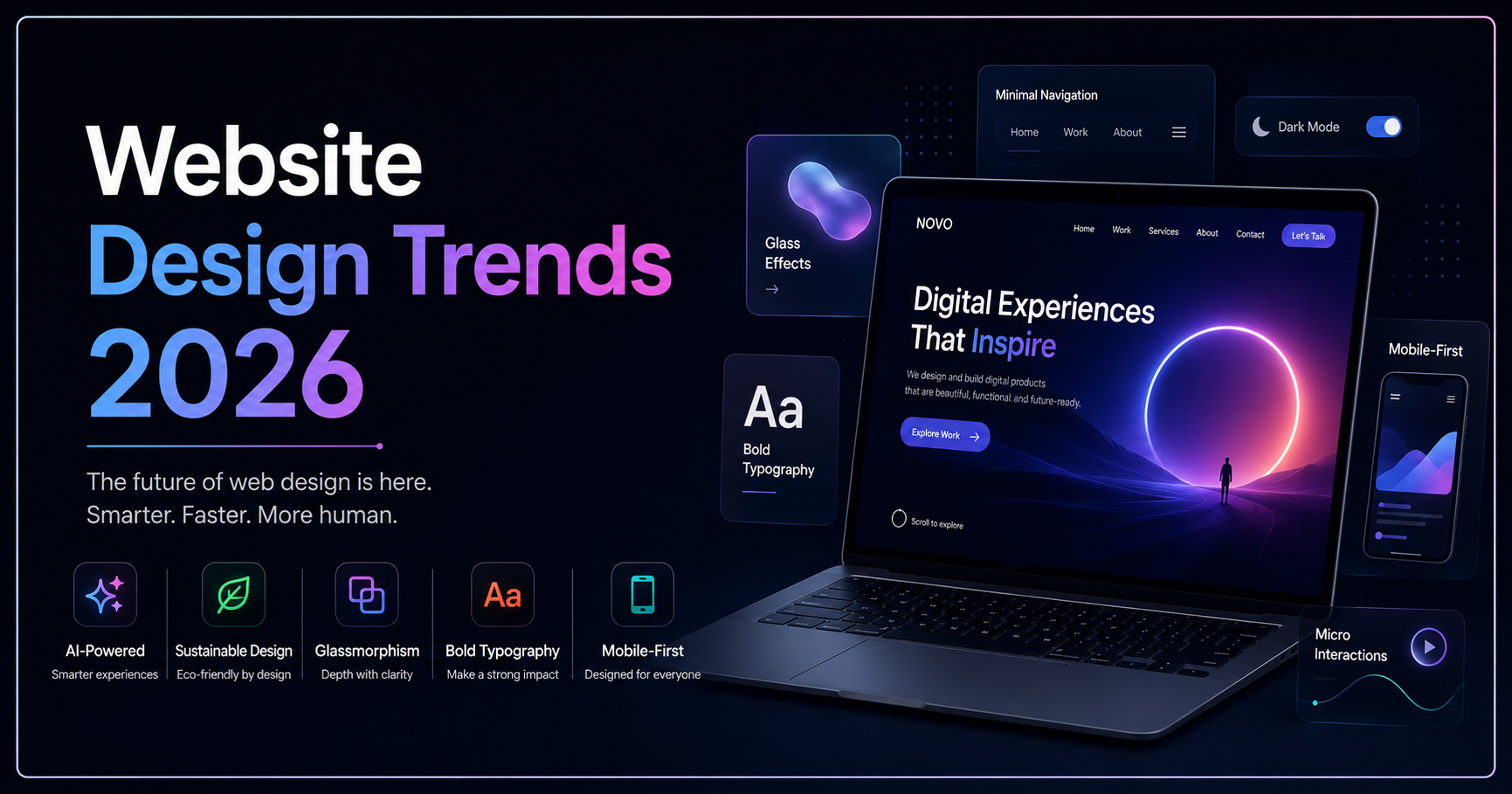
Top Website Design Trends 2026 You Can’t Ignore
The digital landscape is shifting beneath our feet. As we enter 2026, the internet is no longer just a collection of static informational portals. Instead, it has evolved into an ecosystem of highly intelligent, spatial, and deeply customized digital experiences. Driven by rapid breakthroughs in artificial intelligence, spatial computing, and next-generation browsers, modern web design is undergoing its most radical transformation in a decade.
For business owners, marketers, and developers, keeping pace is no longer optional—it is a baseline requirement for survival. Attention spans have compressed to mere fractions of a second, and consumer expectations for flawless performance are at an all-time high. To maintain a competitive edge, understanding the dominant website design trends 2026 is crucial. Let’s dive deep into the definitive movements redefining how we build and experience the web today.
💡 Key Takeaways: What Drives Web Design in 2026?
- Hyper-Personalization: Static layouts are being replaced by AI-driven, dynamic UI modifications based on visitor behavior.
- Immersive Engagement: Lightweight 3D elements and advanced micro-interactions are keeping user session times longer than ever.
- Inclusive Performance: Accessibility-first principles and core web vitals dictate search engine rankings and conversion success.
1. AI-Powered Personalized Experiences
In 2026, two users visiting the exact same URL might see entirely different websites. AI web design has progressed past basic content recommendations to real-time interface modification. Driven by machine learning models, modern sites analyze user intent, local time, referral source, and browsing history to reshape the layout dynamically.
Real-World Example: An e-commerce platform automatically shifts its typography and navigation paths based on user demographics—displaying a simplified, high-contrast UI for older users and an immersive, video-driven interface for younger audiences.
2. Interactive 3D Elements
Thanks to WebGL, Web GPU, and optimized rendering engines, 3D assets no longer cripple page load speeds. Interactive 3D objects are now an integral component of UI UX trends 2026. Users can rotate products, explore virtual spaces, and interact with three-dimensional data visualizations directly within their mobile or desktop browsers.
This shift brings a tactile feel to digital interfaces. To maintain a responsive website design, developers are utilizing optimized asset pipelines that serve low-poly variants to mobile viewports while delivering ultra-crisp, high-fidelity experiences to high-performance desktop displays.
3. Immersive Scrolling Experiences (Scrollytelling)
Linear scrolling is dead. The modern internet relies on “scrollytelling,” a narrative technique where scrolling triggers dynamic visual transformations, typographic shifts, and spatial animations. Instead of clicking through tedious subpages, users unveil a cohesive brand story simply by moving down the page.
Data from digital design agencies reveals that immersive scrolling experiences increase average time-on-page by up to 40%. The trick lies in balancing creative expression with usability, ensuring that scroll-jacking doesn’t frustrate users looking for quick information.
4. Advanced Micro-Interactions
Micro-interactions are the subtle visual, haptic, or auditory responses that occur when a user performs a specific task. Think of a submit button that morphs into a loading spinner and then gently pulses green upon completion. In 2026, these tiny design touches are highly sophisticated.
By adhering to web design best practices, these micro-interactions provide delightful confirmation loops. They guide the user’s focus, prevent form submission errors, and make digital platforms feel remarkably human and responsive.
5. Accessibility-First Design (WCAG 2.2+)
Accessibility is no longer a post-development checklist item; it is the structural foundation of digital design. With stricter global legal frameworks coming into full effect in 2026, inclusive interfaces are non-negotiable.
This means websites are built from day one to accommodate screen readers, keyboard-only navigation, and diverse cognitive profiles. Designing with accessible color contrasts, variable text resizing capabilities, and explicit aria-labels ensures your business reaches 100% of its potential audience while improving overall SEO performance.
6. Dark Mode & Adaptive Themes
Offering a manual toggle for dark mode is standard practice, but 2026 brings truly adaptive themes. Web applications now detect ambient light conditions through device sensors and cross-reference the user’s OS schedule to transition smoothly between light, dark, and specialized low-light OLED themes.
This reduces ocular strain and preserves device battery life. From a design perspective, it forces creators to develop flexible design tokens where branding elements retain visual integrity across a shifting spectrum of background shades.
7. Hyper-Minimalist Interfaces
As a direct counter-response to visual clutter, hyper-minimalism is seeing a massive resurgence. This trend emphasizes absolute functional clarity: massive whitespace, intentional typography, and the total removal of non-functional decoration.
Hyper-minimalism works beautifully alongside mobile performance optimizations. By relying on CSS variables and native browser layouts instead of heavy structural frameworks, these sites achieve lightning-fast loading speeds, achieving perfect scores across crucial search engine visibility metrics.
8. Voice User Interface (VUI) Integration
As voice assistants and conversational AI become central to consumer life, websites are moving toward dual-mode interfaces. Incorporating native voice search and vocal navigation lets users interact with web layouts completely hands-free.
Optimizing for VUI requires clean semantic HTML markup. When a site is properly structured, voice synthesis tools can easily parse contents, enabling frictionless verbal transactions, content searches, and user profile management.
9. Sustainable and Eco-Friendly Web Design
The digital industry contributes significantly to global carbon emissions due to data center energy consumption. In response, green web design has emerged as a top corporate priority. Sustainable web development aims to minimize the energy required to load a page.
Strategies include serving heavily compressed vector graphics instead of heavy images, writing clean, unbloated code, using green hosting solutions, and utilizing local caching strategies. Sustainable sites run efficiently, load instantly, and signal a clear corporate commitment to environmental responsibility.
10. Low-Code Design Systems and Fluid Frameworks
The boundary between design files and production code has completely dissolved. In 2026, enterprise teams build using fluid, centralized design systems that sync effortlessly between visual sandboxes and web codebases.
This ensures absolute visual consistency across multi-page products. It also allows developers and marketers to roll out highly optimized landing pages, test interactive layouts via real-time analytics, and iterate on UI elements without technical bottlenecking.
Embracing the Future of Web Design
The website design trends 2026 outlines a clear path forward: websites must be intelligent, fast, inclusive, and visually gripping. Relying on outdated layouts from five years ago runs the risk of alienating prospective clients, hurting organic visibility, and dampening conversion velocity.
By updating your digital presence with personalized mechanics, accessible architecture, and immersive storytelling, you create an interactive environment that converts passive traffic into dedicated brand advocates.
Is Your Website Ready for 2026?
Don’t let an outdated user experience hold back your business growth. Contact our expert design consultancy today for a complimentary UI/UX and performance audit.
Frequently Asked Questions
Why is AI web design important in 2026?
AI web design allows platforms to analyze incoming visitor telemetry and adjust the content, interface layout, and conversion funnels dynamically, significantly boosting user engagement and conversions.
How do interactive 3D elements impact mobile loading speeds?
With frameworks like WebGPU and modern asset compression pipelines, 3D graphics can be loaded lazily and rendered smoothly on smartphone browsers without sacrificing page speed performance metrics.
What are the core requirements for modern accessibility-first design?
Modern accessibility focuses on strict compliance with updated WCAG parameters. This involves structural semantic HTML tags, keyboard navigation capabilities, robust contrast ratios, and complete screen-reader friendliness.
What is sustainable web design?
Sustainable web design focuses on minimizing the carbon footprint of websites. This is achieved by creating highly streamlined file footprints, optimizing code efficiency, using local service caches, and hosting on green servers.